
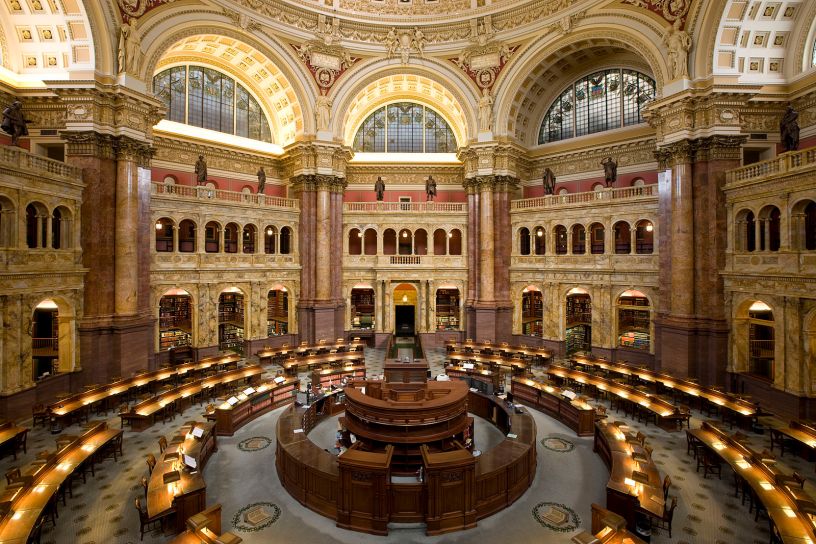
Maria Pallante, just removed as register of copyrights, won’t serve as a senior advisor to Librarian of Congress Carla Hayden.
She instead has submitted a letter of resignation from LoC, effective October 29.
Meanwhile copyright hawks are using the ouster as ammunition in their push for an industry-friendly replacement of the U.S. Copyright Office outside the the Library of Congress. From the Hollywood Reporter:
“This is just an example of why the Copyright Office needs to be its own agency,” says Dina LaPolt, an independent lawyer who represents performers and songwriters. “You have a fundamental disconnect between the Librarian of Congress and the Register of Copyrights: The Librarian wants works to be as accessible as possible, and the Register needs to make sure they’re not always accessible unless the copyright holder approves.”
At least some legislators agree. In a statement released Tuesday, Senator Orrin Hatch (R-Utah) said: “The resignation of Maria Pallante as U.S. Register of Copyrights underscores the long-standing challenges associated with housing the Copyright Office in the Library of Congress.”
The American Library Association, the Association of Research Libraries, and pro-library groups such as EveryLibrary should prepare for a worst-case scenario and start a proactive email campaign to keep the copyright office within LoC, not just press for a pro-library permanent successor to Maria Pallante.
EveryLibrary normally focuses on matters such as helping local library supporters fight for adequate library funding. But perhaps the battle over the fate of the U.S. Copyright Office could be an exception, given the impact that anti-library interpretations of the Digital Millennium Copyright Act and other copyright decisions can have on the availability and prices of content for libraries as well as consumers directly. Yes, libraries should be fair to publishers—I think “pro library” can mean “in favor of fair and balanced copyright law.” It’s just that I fear the pendulum has swung too far in the other direction.
Meanwhile, pre-election, library supporters and those of former Democratic presidential candidate Bernie Sanders should remind front-runner Hillary Clinton that the copyright office has often exemplified D.C. at its worst. She has received a fortune from Hollywood campaign donors. At the same time she has called for pro-consumer reforms in such areas as orphan works. So there is hope. Will she take a stand on copyright office matters? Now is the time to approach her with a friendly reminder of the obvious. Joan and Joe Public again and again have lost out to Washington insiders on copyright matters. Significantly the U.S. Constitution says copyright exists to “promote the promote the Progress of Science and useful Arts” as opposed to profit optimization for special interests.
Within the ebook world, the Copyright Office has refused to allow legal cracking of DRM for noninfringing purposes even though many legal scholars believe that DRM is a threat to fair use. DRM is also a threat to book culture. It destroys the concept of ownership and complicates the passing of personal libraries on to children and grandchildren.
Not to mention the accessibility issues. DRM, by making ebooks harder to enjoy than without it or with gentler measures such as watermarking, is ironically a threat to the book industry’s prosperity. The Copyright Offices over the years has aggravated the mess that Congress created by creating an anti-DRM circumvention clause. It should be far more generous with exemptions than at the moment.
Just one example of the office’s pro-industry bias
The DRM outrages are just one example of how often industry has prevailed at the Copyright Office. Recently the Electronic Frontier Foundation filed a Freedom of Information request to find out why the Copyright Office was so eager to take the side of Hollywood and the cable industries in the cable-box battle. Google and other companies would like to offer competing set-top boxes, a pro-consumer move supported by President Obama. Why should Hollywood “control your TV“? But this proposed change in regulations from the Federal Communications Commission has been put on the back burner and replaced by a less ambitious vision. And you can thank the Copyright Office in part.
“For months,” wrote the EFF’s Ernesto Falcon, based on the 310 pages of correspondence revealed by the FOIA request, “the Motion Picture Association of America and its allies, representing major TV and movie studios, aggressively lobbied the Copyright Office to take sides in the set-top box debate. Meanwhile, it appears that the Office made no attempt to seek other views, whether from independent manufacturers, technologists, or consumers. In fact, Copyright Office officials only spoke to competitive manufacturers after the Office’s opinion letter to the FCC and Congress was already written.” Here’s more from EFF:
After the FCC announced its intention to break up the set-top box monopoly in February of this year, MPAA quickly called on the Copyright Office to meet on the matter. The documents indicate that the first meeting the Copyright Office held on the set-top box issue was not with the FCC but rather the MPAA. Although both the FCC and MPAA reached out to the Copyright Office in late March, Copyright Office officials met with MPAA on April 11 while postponing and meeting with the FCC a week later. Throughout the spring and summer of this year, the Copyright Office alternated between meetings with the FCC, MPAA, and other major content companies such as Comcast and Viacom. On May 31, just hours after holding a conference call with MPAA, the general counsel of Copyright Office emailed her counterpart at the FCC saying “the proposed rule may in fact implicate some rather serious copyright concerns.”
Allies in Congress also reached out to the Copyright Office during the summer. On June 17, a staffer for Congressman Ted Deutch wrote to the Copyright Office, offering to write a formal request for the Office’s opinion on the set-top rules. The premise of the email was that the Congressman was told that Maria Pallante, who was then the head of the Copyright Office, had “expressed a willingness to weigh in on the set top box issue” but would need a Member of Congress to ask first. While the Copyright Office staff indicated internally that they do not invite such requests and were confused by the email, they ultimately did weigh in against the set-top box proposal on August 3rd in response to a formal request sent in mid-July by four Members of Congress including Congressman Deutch.
It seems that despite holding itself out as a neutral expert agency on copyright matters, the Copyright Office regularly engaged in discussions with only one set of parties as it formed its opinion. Not once did the agency reach out to the copyright scholars who explained to the FCC that no copyright interests were harmed by the set-top box proposal. Nor did the agency rethink its position when these same parties made clear that what they want is for the FCC to create new legal rights for them that have nothing to do with copyright law. The Copyright Office did eventually meet with a group of companies who are seeking to build competitive set-top boxes that consumers can buy, but that meeting happened on August 2, just one day before the Office issued its public statement. And that statement gives short shrift to the technology companies’ concerns.
When the U.S. Copyright Office waded into the debate, it could have brought an end to the misleading handwringing over copyright. Instead, it did the opposite by echoing the MPAA and cable companies, claiming that if cable operators were required to allow customers to use the devices of their choice to view the programs they pay for, the studios’ copyrights would somehow be violated. They even went so far as to say the current copyright law landscape is insufficient and therefore the FCC must do more to protect rightsholders.
If this is happening in the set-top top area, what has been going on with e-book related ones? I’d love to see EFF file an Freedom of Information request, if it has not done so already, for so-far-not-public correspondence between the Copyright Office and others on the issue of allowing ebook-lovers to crack DRM for such noninfringing purposes. Just what’s been going on? In a related vein, I’m curious if pro-industry bias of the kind associated with the set-top box correspondence explains why Librarian of Congress Hayden locked Pallante out of her email even while offering her a job as a senior advisor? Did Dr. Hayden want to make certain all the email was preserved at minimal cost, for the purposes of both internal inquiries and the servicing of FOIA requests from pro-library and pro-consumer interests?
Unlikely, but I still hope Maria Pallante will reconsider her resignation
Just the same, I’d still be thrilled if Maria Pallante reconsidered her resignation since she could serve as a bridge between Dr. Hayden and the copyright community as part of national digital library efforts. Part of this could be a national digital library endowment. Within the area of text, it’s pretty sad to see her and many other well-meaning people on both sides fighting over crumbs—the average U.S. household spends only around $100 a year on recreational reading. Instead the copyright interests and librarians and others should focus on increasing the amount of money for books and libraries. Just ten Americans are together worth half a trillion dollars. Libraries would be natural recipients of money from the Gates Giving Pledge. Among other activities a national digital library endowment could not only promote reading and libraries, but also individual titles by way of well-placed spots on TV and elsewhere—for example, a thriller novel advertised on a program appealing to the same audience (“get the library ebook or go to your library to read…”). Not just libraries but also publishers and bookstores would benefit through the exposure. People who couldn’t immediately check out the library book due to high demand could still buy or rent it. A win for all.
Detail: One other argument for the U.S. Copyright Office to remain within LoC is that the library needs easy access to everything copyrighted. This will be both easier and harder in the born-digital era. More content can easily be stored, but at the same time the greater volume of submissions may be a challenge. I wonder if an independent copyright agency would care as much about the needs of the world’s biggest library.
Image credit: Here.
 teleread.org

My hunch is that, given this is the Obama adminstration, this isn’t a vast conspiracy. It’s just Chicago-machine politics. Getting rid of Pallante means she can be replaced by someone who’ll make a particular donor or group of donors happy. Follow the money.
Watching librarians during the Google Book Settlement debate didn’t leave me impressed. They weren’t for or against strict or lax enforcement of copyright. They were simply looking out for their own interests. Shoving aside copyright to created a massive online book database was fine with them. What wasn’t fine was that the settlement made the result a monopoly and that monopoly, Google, could charge what it wanted to libraries. Stealing was OK, they were saying, but fencing what was stolen at too high a price wasn’t. Pitiful.
I’ve grown so tired of all our squabbles, that I’ve started a new policy. I listen to a group, seeing if anything it advocates serves the public interest at the expense of its own interests. If I hear nothing, I ignore them.
That’s a depressing policy. There are numerous professions that only get hot and bothered when their own interests are threatened. We do well to ignore them. If they refuse to give, don’t let them take.
LikeLike
@Mike: Thanks for your thoughts. We’ll agree to disagree about fair use and indexing. As for librarians, YMMV. Some aren’t so engaged, but many ARE most passionate about the need for balanced copyright. So so glad to see Carla Hayden at LoC.
LikeLike